
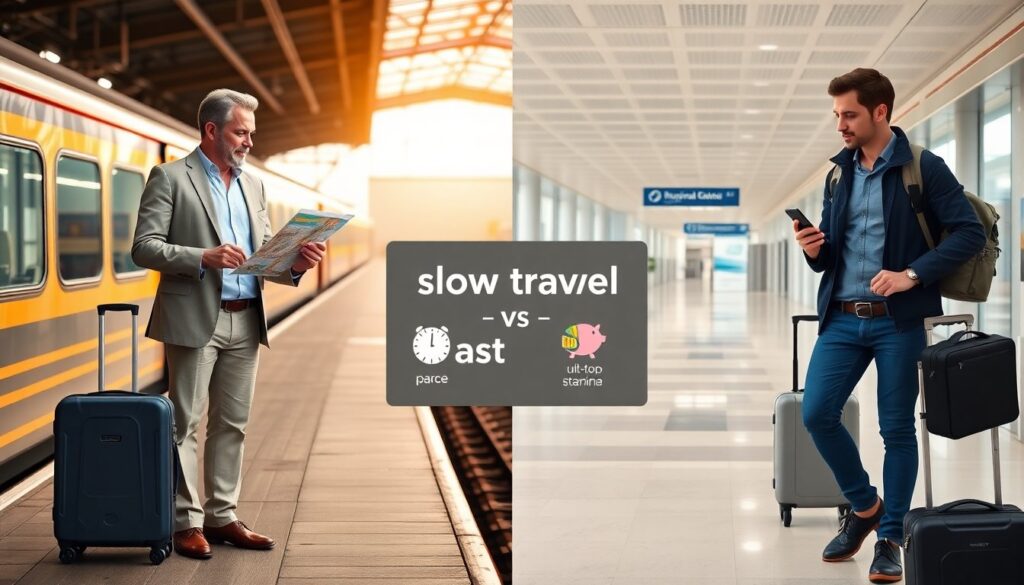
Slow travel vs fast travel appears in travel conversations more often. This guide compares both styles and gives clear steps to pick one. It shows core benefits, common formats, and practical tradeoffs. The reader sees how time, budget, and energy affect the choice. The voice stays direct and factual to help planning decisions.
Key Takeaways
- Slow travel emphasizes deeper experiences and longer stays, reducing transit time and stress while enhancing local connections.
- Fast travel prioritizes covering many destinations quickly, ideal for short trips and travelers seeking variety and big-picture views.
- Choosing between slow travel and fast travel depends on trip length, goals, energy levels, and personality preferences for routine or variety.
- Slow travel usually saves money on transport and accommodations through longer-term rentals and local transport like trains, while fast travel incurs higher costs with flights and frequent moves.
- Planning slow travel requires flexible, loose schedules, whereas fast travel demands tight bookings and strict timetables to manage multiple stops effectively.
What Is Slow Travel? The Principles And Practical Benefits
Slow travel describes travel that stays longer in one place. It focuses on depth, local life, and fewer moves. Travelers choose slow travel to reduce transit time, lower stress, and spend time on real experiences. Slow travel often uses trains, short-term rentals, and local markets. The style supports learning a language, building routines, and saving transport costs. Many travelers report better memory of trips and stronger local ties. For practical tips on packing and essentials, readers can follow a useful slow travel packing list that lists durable items and multiuse gear. For those who need budget ideas, the piece on how to travel slow and cheap shows ways to cut daily costs while staying longer.
What Is Fast Travel? Goals, Typical Formats, And Why People Choose It
Fast travel describes travel that covers many places quickly. It focuses on variety, highlights, and tight schedules. Travelers choose fast travel to see more sights in limited time. Typical formats include city-hopping flights, multi-stop bus tours, and night trains. Fast travel fits short vacations, business trips with spare time, and travelers who prefer big-picture views. The style demands efficient packing, firm reservations, and quick transitions. For itineraries that compress time, readers can compare methods with a slow travel europe itinerary to see what changes when speed increases.
Key Differences Between Slow And Fast Travel
The two styles differ in core areas. Slow travel trades distance for depth. Fast travel trades depth for distance and variety. The following subpoints break the differences into clear categories.
Pace, Planning, And Flexibility
Pace defines each style. Slow travel keeps a low daily pace and flexible plans. Fast travel keeps a high daily pace and firm timetables. Slow travel allows spontaneous local activities. Fast travel requires strict scheduling to hit multiple stops. Planning differs too. Slow travel needs loose plans and long-stay bookings when needed. Fast travel needs detailed bookings and tight connections. Travelers who prefer calm and fewer moves tend to like slow travel vs fast travel. For a step-by-step trip plan, a guide on how to plan a slow travel trip shows the simpler booking approach for longer stays.
Budget, Accommodation, And Transport Tradeoffs
Money affects the choice strongly. Slow travel often lowers per-day transport costs and increases savings on flights. Slow travel also uses longer-term rentals, which cut nightly rates. Fast travel raises transport costs with more flights and transfers. Fast travel often uses budget hotels and short-term stays that cost more per night. Transport choices vary. Slow travel favors trains and buses for comfort and views. Fast travel favors planes and high-speed options to save time. For train-focused options, a primer on train travel europe slow travel gives concrete price and route examples. For cost-saving tactics on slow trips, the post about benefits of slow travel lifestyle outlines financial gains from long stays.
How To Choose The Right Style For Your Trip
Choosing a style requires clarity on time, goals, and energy. The decision must match the trip purpose, the available days, and personal stamina. The next checklist helps sort factors quickly.
Decision Checklist: Time, Goals, Energy, And Personality
Time: Count travel days. If the trip has under five days, fast travel likely fits. If the trip has two weeks or more, slow travel likely fits. Goals: List top three goals. If those goals include deep learning or rest, pick slow travel. If they include many landmarks or a wide sample, pick fast travel. Energy: Estimate daily energy. High-energy travelers handle fast travel well. Low-energy travelers get more value from slow travel. Personality: Ask if the traveler likes routine or variety. Routine favors slow travel. Variety favors fast travel. For beginners who want to try slow travel first, the resource with slow travel tips for beginners gives a short checklist and simple moves. For a focused primer on what the lifestyle means, the overview of what is slow travel lifestyle explains common choices and expectations.